The Big Five personality traits at work (and how to use them in interviews)
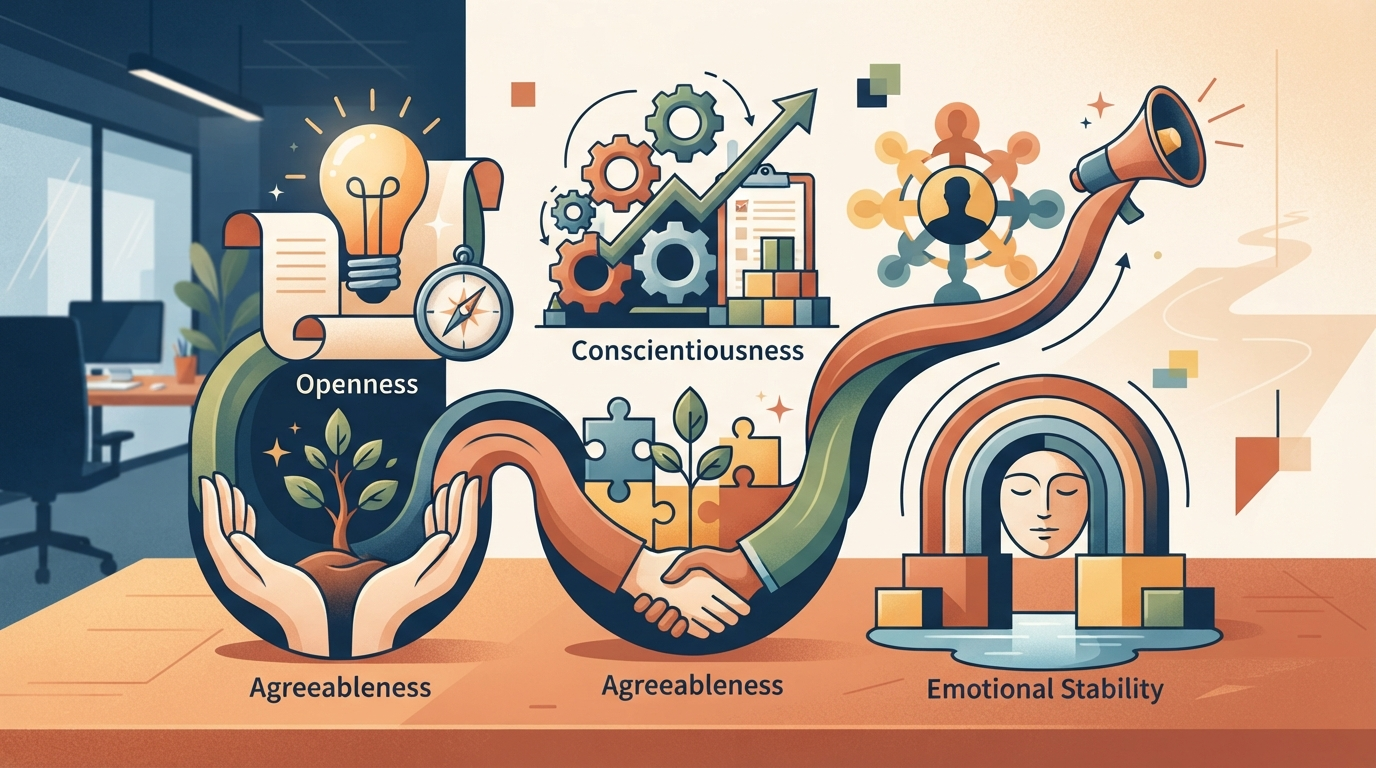
In this guide
Personality tests are everywhere, but most psychologists rely on one model: the Big Five. It describes personality with five traits, each on a scale rather than a box. You can take the free 20-question work personality test in about three minutes.
The five traits
| Trait | Higher scores | Lower scores |
|---|---|---|
| Openness | Curious, imaginative, enjoys change and new ideas | Practical, prefers proven methods |
| Conscientiousness | Organised, dependable, plans ahead | Flexible, spontaneous, adapts quickly |
| Extraversion | Outgoing, energised by people | Reserved, focused, prefers depth |
| Agreeableness | Cooperative, considerate, builds trust | Direct, independent, comfortable with tough calls |
| Emotional stability | Calm under pressure, bounces back quickly | Sensitive, alert to risks, cares deeply about outcomes |
No end of any scale is "better". A lower agreeableness score suits audit or negotiation; a higher one suits nursing or HR.
Big Five or MBTI?
MBTI sorts people into 16 types, so someone just over the line between introvert and extravert gets the same label as a strong introvert. The Big Five measures each trait on a scale, which is why it holds up better in research and predicts outcomes at work more reliably. MBTI is also a trademarked, paid assessment. Our test uses the Mini-IPIP, a short form from the public-domain International Personality Item Pool.
Which traits matter most at work
Across many studies, conscientiousness is the trait most consistently linked to job performance in almost every type of role. Emotional stability matters in high-pressure jobs, extraversion in sales and leadership, and openness in roles that need learning and creativity. But fit matters more than any single score: a strongly introverted analyst can be excellent at their job.
Using your result in an interview
Don't quote scores. Interviewers want evidence. Use your strongest traits to choose stories:
- High conscientiousness: "I set up a tracker for our team's month-end deadlines; we stopped missing them."
- High openness: "I taught myself Power BI and rebuilt our weekly report in it."
- Lower extraversion: "I prepare thoroughly before client meetings, so I can answer detailed questions on the spot."
- High emotional stability: "When our system went down during peak season, I…"
And for "What's your weakness?", the other end of a strong trait is often an honest answer, such as "I'm very thorough, so I've learned to set a time limit on reviews."
Next steps
- Take the career interest test to match what you enjoy with real careers.
- Read common interview questions for your role, with tips on answering.
- Check your resume shows the strengths you'll talk about.
Items from the Mini-IPIP (Donnellan et al., 2006), International Personality Item Pool, public domain. Results are for self-reflection and are not a clinical or hiring assessment.
Your salary, benefits and rights at work in Malaysia.
Use the free pay calculators →22 pages: a step-by-step roadmap, before-and-after examples, 150+ power verbs, a tailoring worksheet and a final checklist. Student and job seeker editions.

Our guides are written and reviewed by people with years of hands-on hiring experience: screening applications, interviewing candidates and building teams. We write the advice we wish more job seekers had.